Medical Tourism in Colombia 2026: Foreign Patient Arrivals Rise 17.6%, and What the Numbers Mean for You
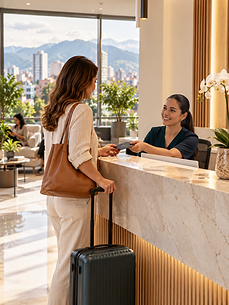
New Migración Colombia figures show steady growth in international patients. Growth is a signal of demand, not a guarantee of quality, and official US health and travel guidance still applies.
What do the new figures show?
Medical tourism in Colombia 2026 is growing: 21,034 non-resident foreigners entered the country for medical treatment between January and August 2026, a 17.6% increase over the same period of 2025, according to Migración Colombia data released by the travel agency association ANATO and reported on September 28, 2026.
The figures come on top of a strong 2025, when 26,786 non-resident foreigners arrived for medical treatment, 18.4% more than in 2024. The Bogotá city government repeated the same national totals on October 8, 2026, citing its Instituto Distrital de Turismo.
Where are international patients going?
Arrivals are concentrated in three cities. Bogotá, Cali and Medellín together received 85.3% of medical travelers in the first eight months of 2026, and the top five cities accounted for 92.2%.
City | Medical travelers, Jan–Aug 2026 | Share of national total |
Bogotá | 7,320 | 34.8% |
Cali | 5,889 | 28.0% |
Medellín | 4,737 | 22.5% |
Barranquilla | 867 | 4.1% (calculated) |
Cartagena | 590 | 2.8% (calculated) |
Source: Migración Colombia via ANATO, as reported by El Colombiano (September 28, 2026). Shares for Barranquilla and Cartagena calculated by Sansavi from the published totals.
For readers interested in the Coffee Region, the data published so far do not break out Pereira, Manizales or Armenia. That absence matters: smaller destinations should be evaluated on their own verifiable information, not on national headlines.
What treatments bring patients to Colombia?
Reports on the ANATO release list oncology, cardiology, fertility care, bariatric surgery, ophthalmology, dentistry, plastic and reconstructive surgery, and comprehensive check-ups. In Medellín, the Cluster Medellín Health City reported 24,384 international patients in 2025, led by diagnostic services (45%), medical consultations (17%) and ophthalmology (13%).
The DANE International Visitor Survey, cited by ANATO, puts average spending by medical travelers at more than US$3,200 per trip. That figure is an average across very different treatments and should not be read as the cost of any procedure.
What should travelers weigh alongside the growth?
Growth shows demand. It does not, on its own, show that every provider meets the same standard. Two official US sources are worth reading before booking:
US Department of State. Colombia carries a Level 3 "Reconsider travel" advisory, issued March 31, 2026, citing crime, terrorism, civil unrest, kidnapping and natural disasters. Several areas are Level 4, including Arauca, Cauca (excluding Popayán), Valle del Cauca (excluding Cali) and Norte de Santander. The advisory notes that some US citizens have suffered serious complications, and some have died, after cosmetic or elective surgery.
CDC. On June 2, 2026, the CDC published a review of 2014–2024 consultations that identified 21 reports involving about 145 patients with adverse outcomes, mostly infections, after cosmetic procedures performed in the United States and abroad. The study did not name countries.
None of this means patients should avoid Colombia. It means the same diligence applies everywhere: verify the professional, confirm the facility, plan recovery time and know who handles complications.
What does ANATO say comes next?
ANATO's executive president, Paula Cortés Calle, said the country has conditions to build a more integrated health and wellness tourism offer, and that the challenge is coordinating the health sector, tourism, destinations and businesses. That is a statement of intent from an industry association, not an assessment of clinical quality.
Planning from abroad
Check your professional's registration in ReTHUS before you travel. [Enlace interno sugerido: cómo verificar a un médico en ReTHUS]
Read the current State Department advisory for your exact destination, not only the country.
Ask how follow-up and complications are handled after you return home.
Request your medical records in English before you leave.
How many foreign patients came to Colombia in 2026? Migración Colombia recorded 21,034 non-resident foreigners entering for medical treatment from January to August 2026, up 17.6% year on year.
Which Colombian city receives the most medical tourists? Bogotá, with 7,320 medical travelers (34.8%) in January–August 2026, followed by Cali and Medellín.
Is Colombia safe for medical tourism? The US State Department rates Colombia Level 3, "Reconsider travel," with some areas at Level 4. Safety depends on the destination, the provider and your planning.
Does growth in medical tourism mean better quality? No. Arrival numbers reflect demand. Quality must be checked provider by provider, through registration, facility standards and complication protocols.
How much do medical travelers spend in Colombia? DANE's International Visitor Survey puts the average above US$3,200 per trip, across all treatments. It is not a procedure price.
Does the data include Pereira or the Coffee Region? The published breakdown covers Bogotá, Cali, Medellín, Barranquilla and Cartagena only.
The 2026 figures confirm that more international patients are choosing Colombia, mostly in its three largest cities. For readers, the useful takeaway is practical: let the trend open the conversation, and let verification, planning and follow-up decide it. Explore more in the Sansavi Magazine and Medical Directory at www.sansavi.com.
Medical disclaimer: This article is for information only and does not replace consultation with a licensed health professional.


Comments