Microneedling: Does It Really Work to Rejuvenate Your Skin?
By Sansavi | Beauty & Fashion
Over the past few years, microneedling has become one of the most popular aesthetic treatments for people looking to improve skin texture, soften fine lines, and stimulate collagen production without undergoing surgery.
But behind the popularity of this so-called collagen-induction treatment lies a more important question:
Does microneedling really work to rejuvenate the skin?
The short answer is yes, microneedling can improve certain signs of skin aging and texture, but results depend on your skin type, the condition being treated, the device used, treatment depth, and the expertise of the professional performing the procedure.
A 2025 systematic review analyzed 21 studies involving 723 patients who underwent microneedling for facial rejuvenation. The main outcomes evaluated included wrinkles, skin texture, photoaging, and skin laxity.
So what actually happens when tiny needles come into contact with your skin?
What Is Microneedling?
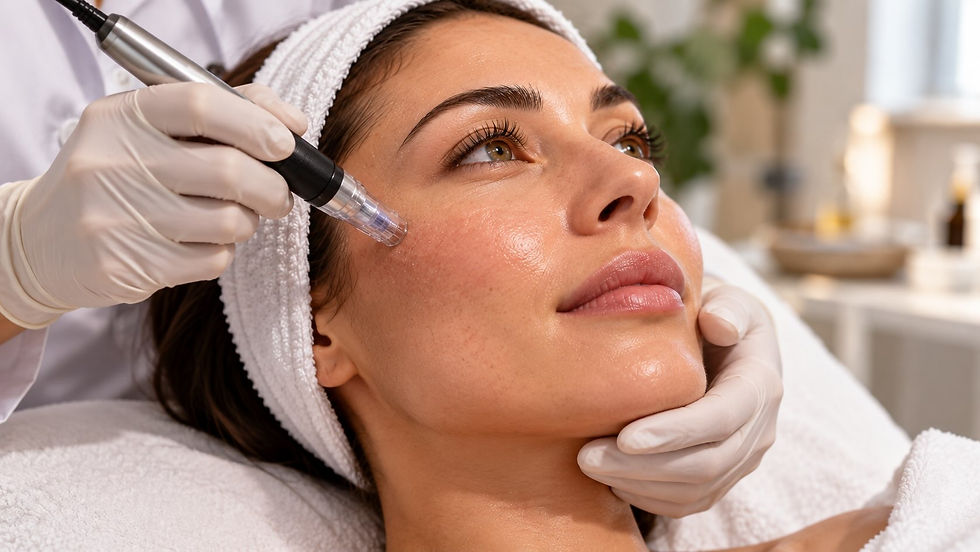
Microneedling, also known as collagen induction therapy, is a cosmetic procedure that uses a device equipped with very small needles to create controlled micro-injuries in the skin.
These microscopic punctures trigger the body's natural wound-healing response, which can lead to changes in the structure and appearance of the skin.
There are different types of microneedling devices and treatment depths. Some consumer products are designed for superficial use, while medical devices used by trained professionals can penetrate deeper layers of the skin.
This means that not all microneedling treatments are the same.
A professional treatment should not be judged simply by the number of needles or by before-and-after photos posted on social media. The device, technique, treatment depth, and patient's individual condition all matter.
How Does Microneedling Work for Skin Rejuvenation?
The goal of microneedling is to create controlled micro-injuries that activate the skin's natural repair mechanisms.
In simple terms, the process can be understood as:
Controlled micro-injury → healing response → skin remodeling → gradual improvement in appearance.
Research on facial rejuvenation has particularly examined the effects of microneedling on wrinkles, skin texture, photoaging, and skin laxity.
This also explains why results do not necessarily appear immediately after a treatment.
Microneedling is not designed to instantly fill a wrinkle or dramatically change facial volume. Instead, it aims to stimulate a biological repair and remodeling process that can gradually improve the appearance of the skin.
What Are the Benefits of Microneedling?
Depending on the indication and professional assessment, microneedling may be used to improve the appearance of:
Fine lines and wrinkles
Uneven skin texture
Certain acne scars
Signs of photoaging
Some surface irregularities
The U.S. Food and Drug Administration (FDA) has authorized certain microneedling devices to improve the appearance of facial acne scars, facial wrinkles, and abdominal scars in adults aged 22 and older.
For acne scars, research has found improvements in their appearance following microneedling, although the available evidence does not establish that microneedling is superior to every other treatment option.
This distinction is important:
“It works” does not mean it is the best treatment for everyone.
Does Microneedling Work for Wrinkles?
This is one of the most common questions.
Facial rejuvenation is one of the primary applications studied for microneedling. In a 2025 systematic review, wrinkles were the most frequently evaluated aesthetic outcome.
However, realistic expectations are essential.
Microneedling may improve the appearance of certain fine lines and the overall texture of the skin, but it is not the same as a facelift, nor will it necessarily produce the same results as other dermatological or surgical procedures.
The right treatment depends on what is actually causing the change you want to address.
Is it skin texture? Pigmentation? Loss of volume? Skin laxity? Dynamic wrinkles?
Each concern may require a different approach.
How Many Microneedling Sessions Do You Need?
There is no universal number of sessions that works for everyone.
The FDA notes that more than one procedure may be needed to achieve the desired cosmetic result. It also indicates that some improvements may be temporary and may require maintenance treatments.
The number of sessions may depend on:
Your treatment goal
Your skin condition
Treatment depth
The device being used
Your individual response
Whether you are treating rejuvenation, texture, or acne scars
This is why promises such as “perfect skin after one session” should be approached with caution.
When Will You See Microneedling Results?
One of the most common mistakes is expecting the final result immediately after treatment.
Microneedling triggers a healing and remodeling response, so improvements can develop gradually.
Immediately after treatment, you may experience temporary redness, tightness, itching, peeling, bruising, or sensitivity. These effects generally resolve, although more serious complications are possible.
Your provider should explain what to expect based on the specific procedure being performed.
Microneedling vs. RF Microneedling: What's the Difference?
Although the names sound similar, microneedling and RF microneedling are not exactly the same procedure.
Traditional microneedling uses tiny needles to create controlled micro-injuries in the skin.
RF microneedling combines microneedles with radiofrequency energy to deliver heat into specific tissue layers.
That distinction matters when it comes to safety.
In October 2025, the FDA issued a safety communication regarding certain uses of RF microneedling devices after receiving reports of serious complications, including burns, scarring, fat loss, disfigurement, and nerve damage.
The agency recommends that RF microneedling procedures be performed by appropriately trained and experienced healthcare professionals and states that RF microneedling devices should not be used at home.
More technology does not automatically mean better results.
The right technology is the one that is appropriate for the specific indication and used correctly.
Is At-Home Microneedling Safe?
This is an area where consumers should be particularly careful.
Some at-home microneedling products have very short needles designed for superficial use and do not penetrate the living layers of the skin.
These products are not equivalent to medical devices used in professional settings.
When needles penetrate deeper into the skin, the risk of bleeding, injury, infection, and other complications increases if the procedure is not performed correctly.
The FDA recommends choosing a healthcare provider who is appropriately trained and asking how the device is cleaned and whether a new needle cartridge is used for each patient and treatment session.
When a procedure breaks the skin barrier, hygiene is not a minor detail. It is a fundamental part of safety.
Who Should Avoid Microneedling?
Not everyone is a good candidate for microneedling.
The FDA identifies certain conditions in which the procedure may not be appropriate, including certain bleeding disorders, use of blood-thinning medications, immunosuppression, uncontrolled diabetes, active skin infections, and some dermatological conditions.
Other situations may also require an individualized medical assessment.
Before booking a treatment, the right question should not simply be:
“How much does microneedling cost?”
It should also be:
“Is microneedling appropriate for my skin and for the concern I want to address?”
What About Microneedling With PRP?
Many aesthetic clinics offer microneedling combined with platelet-rich plasma (PRP) or other products applied during the procedure.
However, it is important to distinguish commercial popularity from regulatory approval.
The FDA states that its microneedling devices have not been authorized for use with cosmetics, topical medications, drugs, or blood products such as PRP. Therefore, the safety and effectiveness of these combinations have not been reviewed by the agency as part of the device authorization.
This does not mean that every combination is necessarily ineffective. It means that they should not be presented as FDA-authorized combinations when they are not.
So, Does Microneedling Really Work?
Yes. There is evidence that microneedling can improve certain aspects of skin appearance, particularly wrinkles, texture, photoaging, and some acne scars.
But the complete answer is more nuanced:
Microneedling is most useful when the right treatment is used for the right concern and on the right patient.
It is not a universal solution for aging.
It does not necessarily replace other aesthetic treatments.
And not everyone needs the same number of sessions, treatment depth, or technology.
The real evolution of aesthetic medicine should not be about chasing the most popular procedure on Instagram. It should be about choosing increasingly personalized treatments supported by evidence.
7 Questions to Ask Before Getting Microneedling
Before undergoing treatment, consider asking your provider:
What specific skin concern are we treating?
What device will you use?
What treatment depth will be used, and why?
What training and experience do you have with this procedure?
How many sessions might I need?
What risks and side effects should I know about?
What should I do before and after treatment?
The FDA recommends discussing the benefits and risks with a healthcare professional and checking their training and experience.
Sansavi's Take
Microneedling is more than another viral beauty trend.
Clinical research supports its use for certain aesthetic indications, and recent evidence on facial rejuvenation shows promising results for improving aspects such as wrinkles and skin texture.
But skin does not follow trends.
Every face has a different story.
Age, sun exposure, skin type, scarring, pigmentation, elasticity, and individual aesthetic goals should all be considered before choosing a treatment.
So instead of asking:
“What is the hottest aesthetic treatment right now?”
Perhaps the smarter question is:
“What does my skin actually need, and which treatment has evidence to help me achieve it?”
That is the beauty conversation we want to have at Sansavi.
Frequently Asked Questions About Microneedling
Does microneedling really rejuvenate the skin?
Microneedling can improve the appearance of wrinkles, skin texture, and certain signs of photoaging. A 2025 systematic review found clinical evidence supporting these outcomes, although individual results vary.
Does microneedling remove wrinkles?
Microneedling may improve the appearance of certain wrinkles and fine lines, but it does not necessarily eliminate all signs of aging and is not equivalent to a facelift.
Does microneedling work for acne scars?
Yes. Available research shows improvements in the appearance of acne scars following microneedling, although results depend on the type and severity of the scars and the treatment approach.
How many microneedling sessions do I need?
There is no universal number. Multiple sessions may be necessary to achieve the desired result, depending on the condition being treated and the individual's response.
When will I see microneedling results?
Results can develop gradually as the skin goes through its healing and remodeling process. Your provider should explain the expected timeline based on your specific treatment.
Is at-home microneedling safe?
Superficial consumer products are not equivalent to professional medical microneedling devices. Treatments that penetrate living layers of the skin should be performed by an appropriately trained professional.
Is RF microneedling the same as regular microneedling?
No. RF microneedling combines microneedles with radiofrequency energy. It involves different technology and specific safety considerations.
Can microneedling be combined with PRP?
PRP is commonly marketed alongside microneedling, but the FDA states that its authorized microneedling devices have not been authorized for use with blood products such as PRP. Discuss the potential benefits and risks with a qualified healthcare professional.
Medical disclaimer: This article is for informational and educational purposes only. It does not replace professional medical or dermatological advice. A qualified healthcare professional should evaluate your individual skin condition, medical history, and treatment goals before any aesthetic procedure.



Comments