Why Your Skin Ages Faster in Pereira Than at the Beach — And What to Do About It
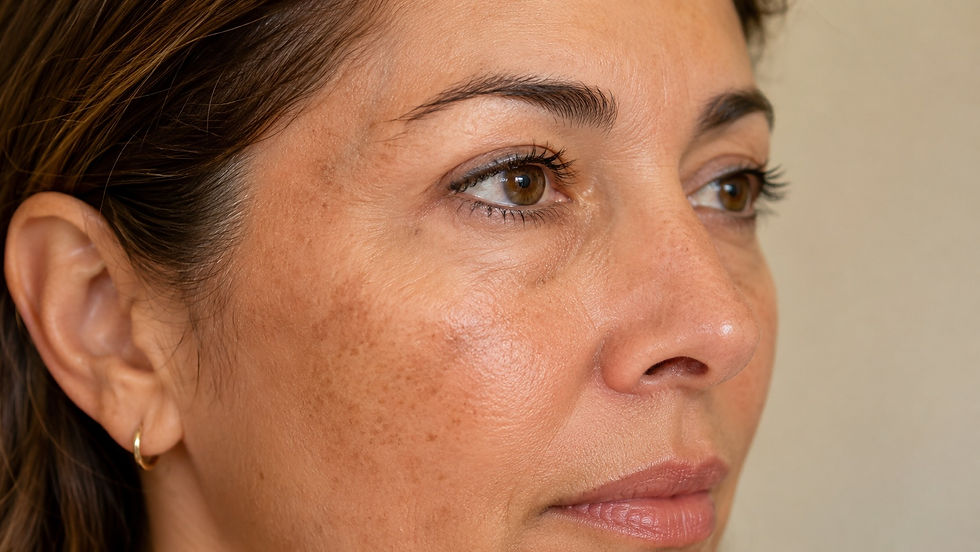
Sun protection, altitude, and the skincare habit most people in the Eje Cafetero are missing
Pereira sits roughly 1,400 meters above sea level, in a city where the light always feels a little brighter and the sky a little closer. That's not just a scenic detail — it's a skincare fact most people never learn until the damage is already visible.
The altitude effect nobody warns you about
UV radiation increases by approximately 10% for every 1,000 meters of elevation gain, according to the World Health Organization. The reason is simple: at higher altitude there is less atmosphere above you to absorb and scatter ultraviolet rays before they reach your skin. Coastal cities filter more of that radiation out; mountain and highland cities like Pereira, Manizales, and Armenia do not.
It's also easy to underestimate exposure on a cloudy day. Clouds absorb far less UV radiation than most people assume, so overcast skies still allow significant UV to pass through. In a region known for its shifting mountain weather, that means the "it's not that sunny today" instinct can be misleading.
Why this matters for how skin ages
Dermatologists widely link cumulative, day-to-day UV exposure — not just visible sunburn — to premature fine lines, uneven tone, and loss of elasticity over time. The exposure that does the most long-term damage is often the kind nobody notices: the walk to work, the commute with the car window down, the afternoon on a covered terrace. None of it feels like "being in the sun," and all of it adds up.
Building a routine that actually fits highland life
The good news is that the fix isn't complicated — it's consistency. A few habits make an outsized difference for anyone living or spending extended time at altitude:
Daily SPF, regardless of clouds or plans. Broad-spectrum sunscreen applied every morning — not just on beach days — is the single habit dermatologists mention most consistently.
Reapplication matters more at altitude. Because UV intensity is higher, the margin for a missed reapplication is smaller than it would be at sea level.
UV passes through glass and car windows. Time spent driving or seated near a window still counts as exposure.
Hats, sunglasses, and shade are not optional extras. At higher UV intensity, physical protection does real work that sunscreen alone doesn't cover.
An easy habit to underestimate — and easy to build
None of this requires a dramatic routine overhaul. It requires treating sunscreen the way people in this region already treat an umbrella during rainy season: not a special-occasion item, but something reached for automatically, every single day, rain or shine.
This article is for general educational purposes and does not replace a professional dermatological evaluation. If you have specific concerns about sun damage, pigmentation, or skin aging, a qualified specialist can assess your skin type and recommend an appropriate routine.


Comments